

Precision Extraction. Total Control.
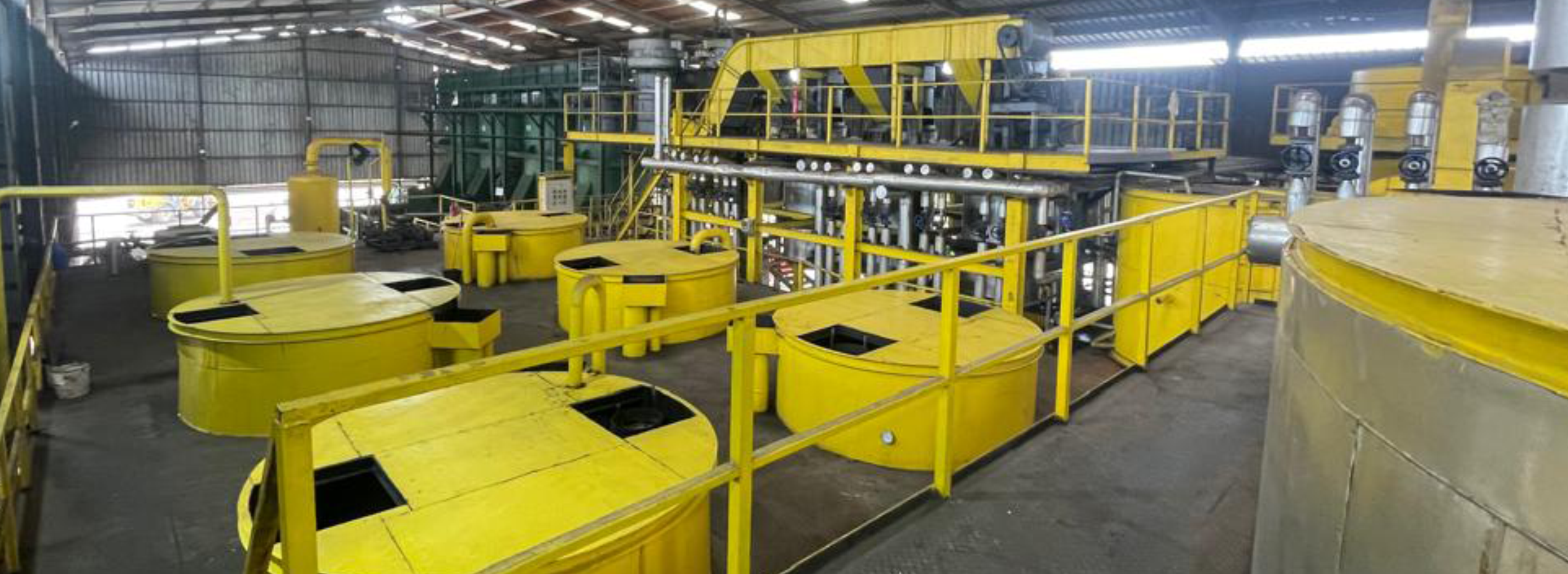
Supraci’s industrial platform is engineered around one core objective: uncompromising product integrity. Operating a modern palm oil mill with a capacity of 45 tonnes of Fresh Fruit Bunches (FFB) per hour, our facility is designed to maximize extraction efficiency while preserving the chemical and physical quality of the oil.
Our manufacturing process covers the full transformation chain, from FFB reception to crude palm oil (CPO) production and palm kernel recovery, under strict process control and hygiene standards aligned with international best practices.
CPO Manufacturing Process
-
FFB Reception and Grading
Fresh Fruit Bunches are received at the mill and weighed on a calibrated weighbridge to record incoming tonnage. Each delivery undergoes visual grading to assess freshness, ripeness, and contamination (such as sand or debris). Only compliant FFB are accepted and rapidly unloaded for processing to minimize free fatty acid (FFA) development.
-
Sterilization
Accepted FFB are conveyed into batch sterilizers, where they are treated with controlled steam pressure. Sterilization deactivates lipase enzymes, softens the fruit mesocarp, and loosens fruitlets from the bunch. After depressurization, sterilized bunches are discharged for threshing.
-
Threshing
Sterilized bunches are fed into rotating drum threshers, where mechanical action separates fruitlets from empty fruit bunches (EFB). Fruitlets proceed to digestion, while EFB are directed to disposal or valorization streams.
-
Digestion
Separated fruitlets are transferred to digesters equipped with rotating arms. Controlled heat and agitation rupture oil-bearing cells within the mesocarp, forming a homogeneous mash and improving extraction efficiency during pressing.
-
Pressing
The digested mash is processed through screw presses, where mechanical pressure extracts the oil. This results in two outputs:
- Press liquor (oil, water, and fine solids), routed to clarification
- Press cake (fiber and nuts), routed to nut recovery and kernel processing
-
Clarification
Press liquor is screened to remove coarse solids, heated, and transferred to clarification tanks where oil separates from water and sludge by gravity. Final purification is achieved through centrifugation and drying. The resulting crude palm oil (CPO) is transferred to heated storage tanks to preserve quality prior to dispatch.
Palm Kernel Crushing (CPKO)
Supraci operates a dedicated palm kernel processing line that converts recovered kernels into Crude Palm Kernel Oil (CPKO) and high-value by-products. The process involves controlled drying, mechanical crushing, separation, and filtration to ensure consistent quality suitable for food, oleochemical, and industrial applications.
By-products such as palm kernel cake and palm kernel shells are systematically recovered and directed toward animal feed and biomass energy uses.
Environmental Management & Resource Efficiency
Our Vision, Our Mission, Our Strategy …..
We at SUPRACI respect the planet we live in and the right of its creatures to live their natural lives undisturbed.
SUPRACI makes sure that necessary steps to conserve and preserve the environment are taken without compromise.
SUPRACI makes sure that extensive effluent water treatment procedures are strictly followed to ensure the safety of marine life, water bed and (to protect) our environment.
Supraci operates under a progressive zero-waste and environmental stewardship roadmap, designed to minimize environmental impact while maximizing resource efficiency.
- Biomass by-products are valorized for energy generation and industrial reuse.
- Effluent water is treated through controlled wastewater treatment processes prior to discharge, ensuring protection of surrounding ecosystems and water bodies.
- Continuous improvements are implemented to align operations with EU environmental expectations and internationally recognized sustainability standards.
Environmental responsibility at Supraci is operational - not declarative - and embedded across the manufacturing process.